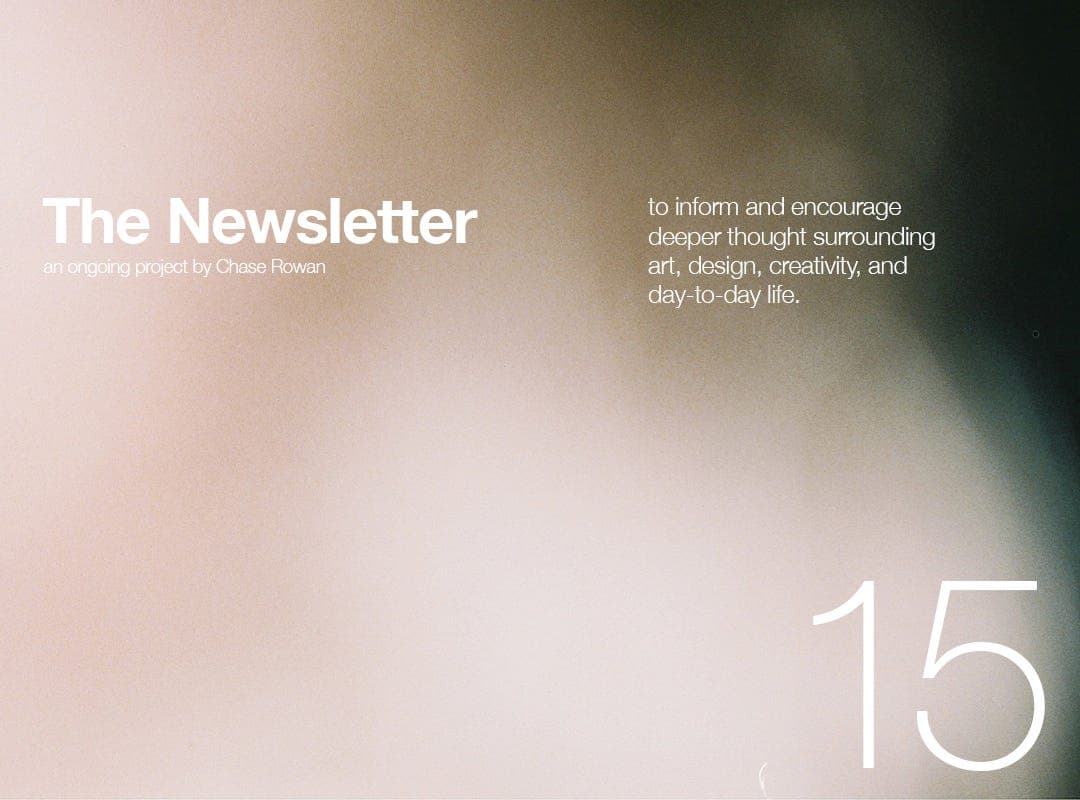
I've been busy.
A lot of us have been busy.
Almost everyone that I talk to you seems to be stressed, "pushing through,” getting by, or some other term that means not so good lately. Although I have been good, I've been very busy. Busy is good, but whenever I get busy and start to feel the effects of my schedule becoming re-organized without my consent and I begin to reminisce.
Often times when life gets hectic it seems so easy to slip into a daydream where we dwell on how good life was when we were holding ourselves accountable to the habits that we like to maintain. But are these memories of what our days were like before our cluttered schedule took over accurate?
Just recently, I wrote a newsletter about all of the different lessons I had been taught by the multiple projects I was juggling. I'm still juggling them - but maybe instead of a nice smooth juggle it’s more of a sloppy “lets see if I can catch these things as they fall” situation. I found myself very depressed last week when I walked into my apartment and saw one of those projects sitting in its half finished state. I immediately picked up the artwork that I had so zealously labored for and stared at it. Thinking about how good life was just 10 days prior to writing this when I was putting in countless hours every evening after finishing my work, creating this new object that has yet to exist in the world, spawned solely from my creative thought. This art exists because of me. And I felt that I had done it a disservice by leaving it half finished.
Moments after having these thoughts and mixed emotions, I was bombarded with another harsh reality. The artwork was not abandoned – nor was the idea. I had just simply gotten busy. But if this was true, why is it so easy for me to get somewhat nostalgic over some thing that wasn't even two weeks ago? Maybe my OCD was working harder than my logical brain in this moment but either way, it felt real.
A few days later I was having a conversation with my good friend Micah Williams, a fellow artist who lives in Australia. He was asking me questions about fabrication and wanted some feedback on his recent work. Not too long into the conversation I asked him what he had been working on and he sent me a short summary of a project, followed by a file that contained the work he was explaining to me titled ‘MODUS OPERANDI - SUMMER.’ I was enamored by this project within seconds. Not only did this work resonate with me so heavily – I was in love with how his concept captured the essence of looking back on moments and remembering them in ways that might not be completely accurate, something I’ve been struggling with heavily while wanting to finish my projects. Each image displayed as a fond memory but with no real subject matter, just a feeling. I considered asking Micah for permission to share his thoughts in a condensed format here in The Newsletter but after thinking about it, I asked if I could just share his full summary and work – thankfully he agreed.
Consider this installment to The Newsletter the first ‘collaborative’ one. This one is less about me and more about work that spoke to me, and I’m thankful that the work is that of a friend. To see more of Micahs work – follow him on Instagram here.
As always, thank you for reading.
SUMMER - MODUS OPERANDI (2022)
Working on this project has coincided with many starts, and even more ends. It has been an interesting season of grief and heartbreak, and there has been a lot of remembering and reminiscing on what was. As I thought about this, it clicked for me — I needed to create something that speaks to where I am at right now, instead of where I was a year ago. Thus, the theme of nostalgia and more specifically, SUMMER, became the focus of my publication turned zine.
After having my focus realigned, the layout and images came almost effortlessly to me. As I thought more about nostalgia as a concept, I thought about how it can actually be quite deceiving. It skews our perspective of the past, colouring everything in a more favorable or pleasant hue. We often ‘misremember,’ only remembering the positive times and conveniently neglecting the negatives. I thought about how I could visually represent this, and thought about blurry images or using a mixed media approach to doctor some of them. But both of these felt a little juvenile.
After a lot of pondering, my thinking lead me to the nature or purpose of the camera. Most commonly, cameras are used to capture moments and memories so that they can live on. They are usually pulled out and used as an immediate reaction to something that is happening. Due to the haste around this, sometimes people miss the moment or capture it imperfectly. I decided to look back at my rolls of film, and found a plethora of wonderful moments that I attempted to capture, but failed. All that remained of those moments and memories were the colours and very ambiguous shapes and tones. They were whatever I wanted them to be — the perfect blend of a real moment colored by imagination — nostalgia.


